Ghost Stories for Christmas

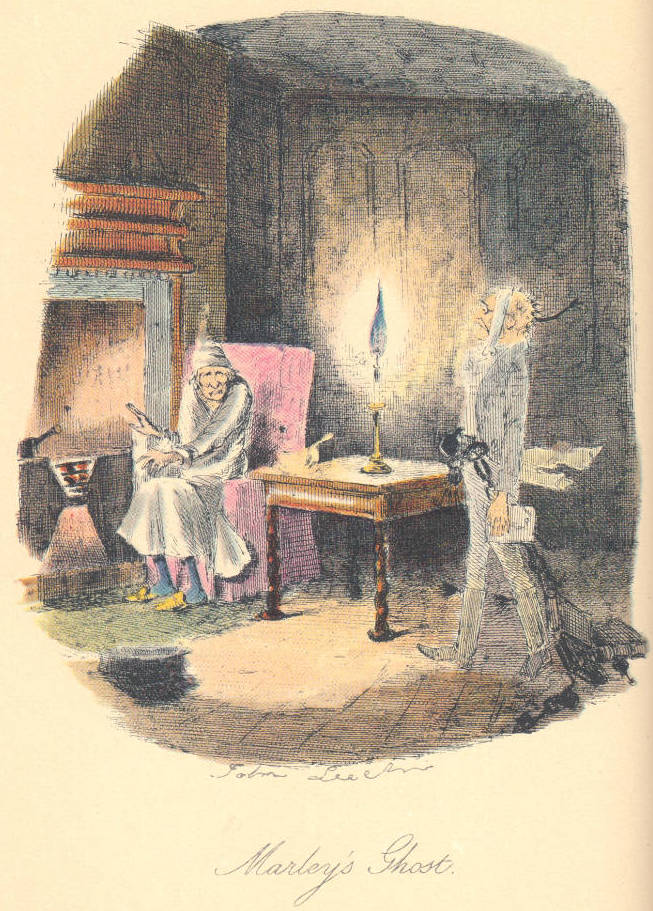
John Leech's original illustration of Ebenezer Scrooge being visited by the ghost of Jacob Marley in A Christmas Carol

Marley was dead to begin with. There can be no doubt whatsoever about that.

And with those immortal words, generations have settled in to embrace the spirit of Christmas — with ghosts. I know very few people1 for whom A Christmas Carol is not an integral part of their idea of the holiday itself. Whether their introduction to it was the text itself, the Muppet version (which actually does include a surprising amount of Dickens’ own words), or any of the myriad other forms and adaptations, its depictions of family and friends getting together in joy, its message of compassion and good will to all mankind, even its nineteenth century trappings of geese and pudding and silly games have all become the markers of the season and the holiday. Yet, for all its good cheer, it is emphatically a ghost story — and a creepy one at that!

Think of the scene when Scrooge, alone in his darkened rooms, hears the sound of Marley’s ghost coming for him:

After several turns, he sat down again. As he threw his head back in the chair, his glance happened to rest upon a bell, a disused bell, that hung in the room, and communicated for some purpose now forgotten with a chamber in the highest story of the building. It was with great astonishment, and with a strange, inexplicable dread, that as he looked, he saw this bell begin to swing. It swung so softly in the outset that it scarcely made a sound; but soon it rang out loudly, and so did every bell in the house.

This might have lasted half a minute, or a minute, but it seemed an hour. The bells ceased as they had begun, together. They were succeeded by a clanking noise, deep down below; as if some person were dragging a heavy chain over the casks in the wine-merchant’s cellar. Scrooge then remembered to have heard that ghosts in haunted houses were described as dragging chains.

The cellar-door flew open with a booming sound, and then he heard the noise much louder, on the floors below; then coming up the stairs; then coming straight towards his door.

Continue reading

Loudly Sing Cuckoo: A Perspective on The Wicker Man (1973)

Dan Mumford’s poster for The Wicker Man

Come. It is time to keep your appointment with the Wicker Man.

Those words, uttered in the stentorian tones of Christopher Lee, echo through the history of horror cinema. And it is, indeed, time that we come to The Wicker Man. It, alongside The Blood on Satan’s Claw and The Witchfinder General, makes up what is often termed “The Unholy Trinity” of folk horror. It is the Ur Text of the genre. The sharp-eyed among you may have noticed that even the name of this website is an homage to the film, and its stunning final scene.

Full disclosure before we begin: I want to like this movie so badly. I can’t say that I actually do. I am, in the truest sense of the word, deeply ambivalent about it. There are moments that I think are perfect. The shape of it appeals to me immensely. The rest of the time it is weirdly groovy, kind of a mess, and feels like it gets in its own way.

None of this has stopped me from watching it multiple times, trying to nail down what about it remains compelling. And, clearly, I am not alone in being intrigued. There is a wealth of writing about The Wicker Man, ranging from densely scholarly essays to enthusiastic rambles to harsh film criticism. But we do all keep coming back to Summerisle.

While the imagery and afterlife of the film are ubiquitous, I’m not sure how many people have actually seen it. So, we are going to take a moment for a brief synopsis.1

Continue reading

Some Quick Movie Reviews

I have so many longer pieces that I have bubbling away on the back burner, and in the meantime, I’ve probably had the attentive capacity of a gnat this past week. So I’ve watched some horror movies! Here’s a barrage of brief reactions.

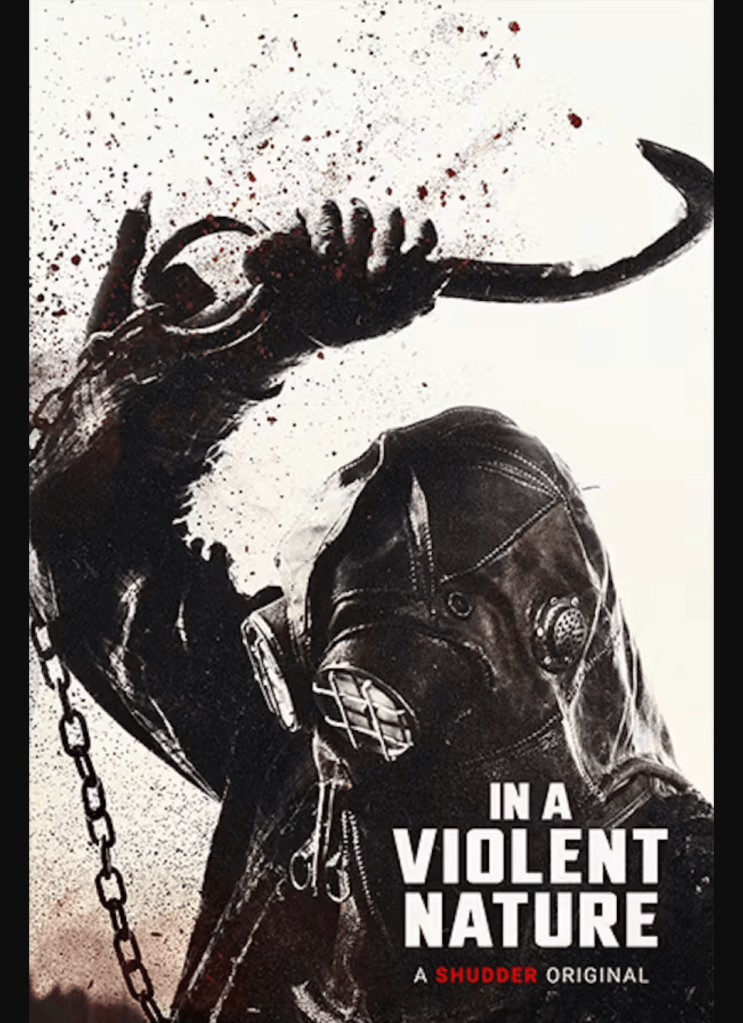
In a Violent Nature (2024, dir. Chris Nash)-
This one generated a bunch of chatter earlier this year with its slasher-from-the-viewpoint-of-the-killer gimmick. Quite often, the gimmick works, but not really to implicate the viewer in the deaths which unfold at the hands of the Jason Voorhees-alike undead stalker. His victims, like those of so many slasher films, are just there to die; with no uncertainty as to where the killer is- we’re always with him- the movie is more an excuse to film those deaths from some interesting perspectives. One kill, at a pond, was particularly beautifully shot. By the end, too, the film abandons its whole schtick by shifting perspectives to follow the Final Girl, which… why? Worth it for some exceptionally gory kills (the yoga girl! The log-splitter!) and for some strangely relaxing nature photography, but, kind of like Skinamarink, this is more an occasionally inspired thought-experiment curiosity than a fleshed-out movie.

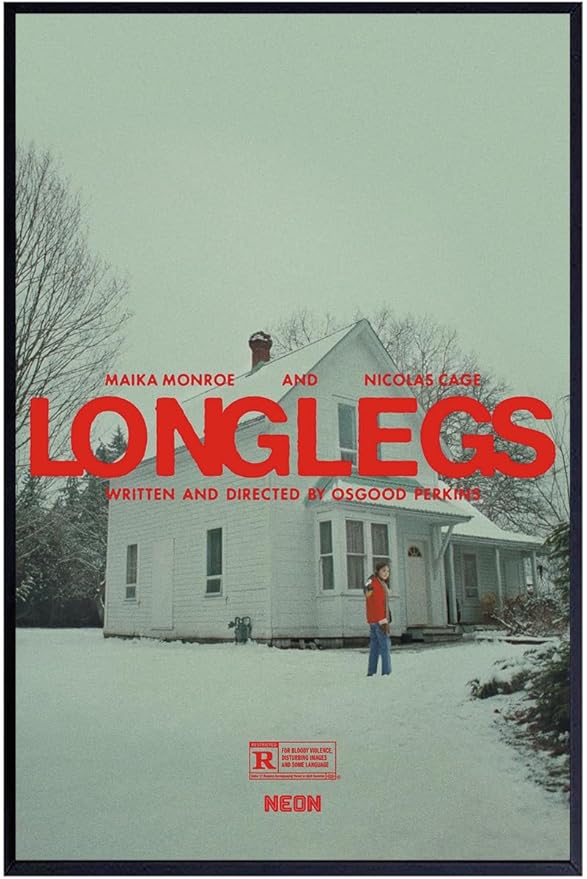
Longlegs (2024, dir. Osgood Perkins)- Oh, Longlegs. Another buzzy horror movie from the year of our lord 2024, this is… a mixed bag for me. It is nigh-on impossible for me to ever see Nicholas Cage as anything but himself, and I can think of, like, two movies in which that works. This is not one of them. He drags the whole movie into camp territory, less scary than hammy, a kind of cartoonish mash-up of Buffalo Bill (hasn’t that character aged well) and Marlon Brando in The Island of Doctor Moreau. Everything around him really is a vibe I enjoy, where banal surfaces are stretched over inexplicable or rotten cores; a nun’s habit hides a Satanist, a planned development houses a serial killer, a young FBI agent contains weird psychic abilities. The movie’s fever-dream distrust of the familiar lends it a really unnerving atmosphere. It’s just a shame it’s punctuated by Cage careening into farce.

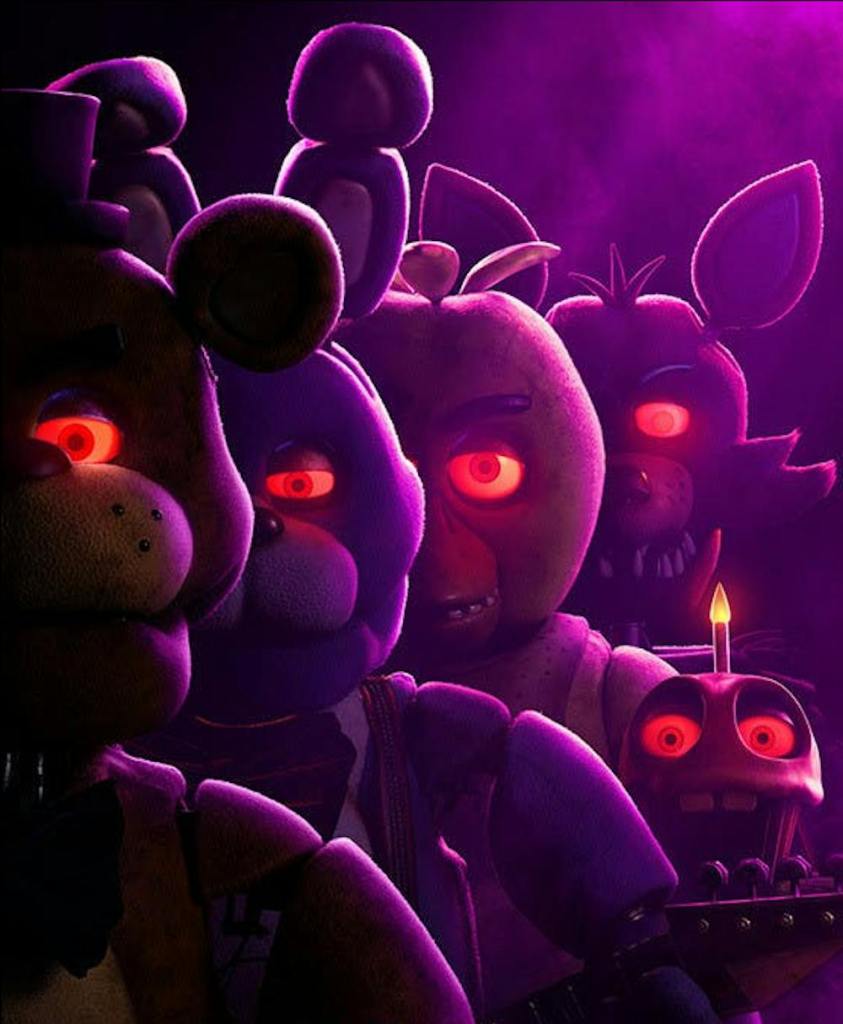
Five Nights at Freddy’s (2023, dir. Emma Tammi)- Look, I can’t fully defend this, I just like this movie. FNAF has always intrigued me, both as a game and here, in this movie, more for what it does unintentionally than what it does deliberately. The franchise communicates an ambivalent, dangerous millennial fixation with nostalgia; we really love what we loved as kids, but those objects don’t love us back, both by ontological necessity and, in this case, because they are possessed animatronic mascots turned murderous because they couldn’t protect children from adults. So, yes, it’s silly on the surface, but horror can say a lot sub rosa. Anyway, this movie completely falls apart by the end, but great production design and practical effects, plus some good performances, save  it from being way more of a mess than it could (should?) have been.

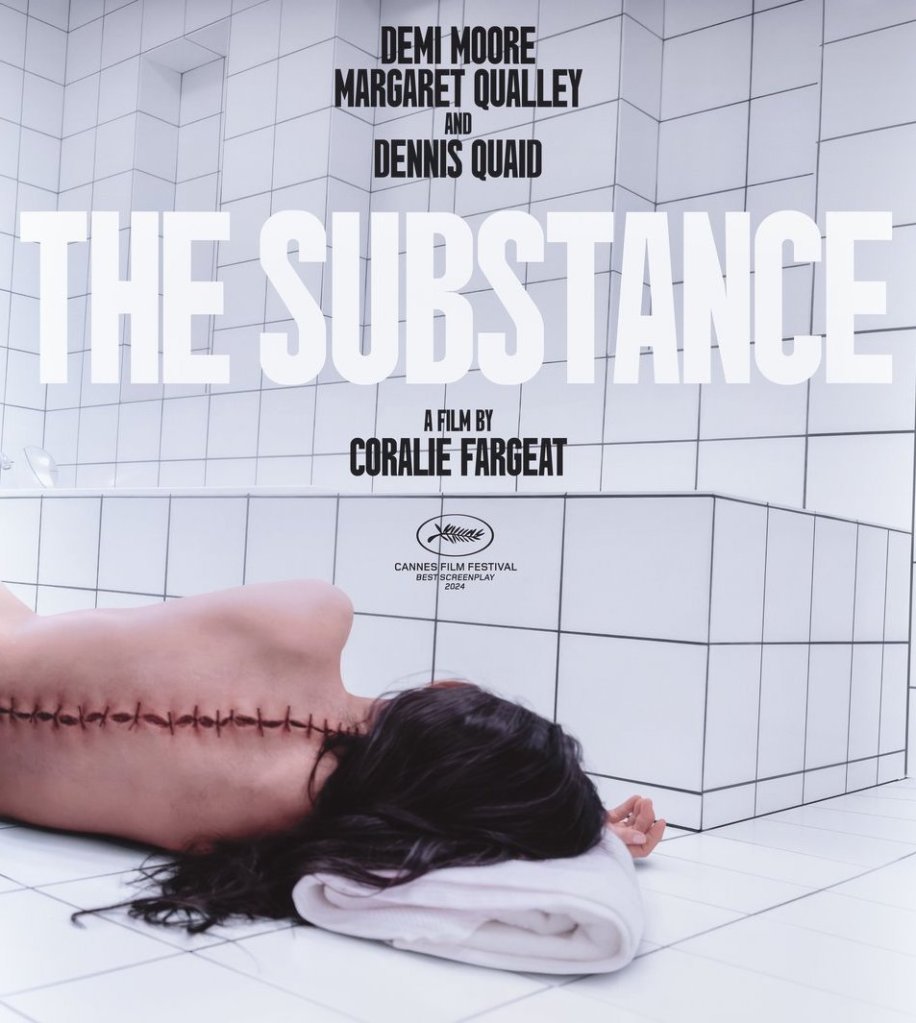
The Substance (2024, dir. Coralie Fargeat)- Hoo boy. I think this one has gotten under the skin of many audiences for its unflinchingly nauseating depiction of the often uneasy relationships women have with our bodies. It’s a difficult thing to see portrayed so viscerally, but also deeply entertaining for the sheer lunacy with which the movie treats it. Is the film very on the nose in how it deals with aging, beauty, female hunger? Yep, but that doesn’t take any of the sting out. Demi Moore and Margaret Qualey are both outstanding here, offering raw, angry, unglamorous performances which only make the increasingly dreadful stakes of their character(s) choices more unnerving. The comparisons to David Cronenberg are obvious, but I think to belabor them kind of diminishes what is an outstanding body-horror film in its own right. I also love any movie which depicts Hollywood as a surrealist nightmare where it is way too easy to vanish, and the lurid, too-bright, Barbie-from-Hell look of LA here is right up my alley. 

A Definitely Positive Review of Hellboy: The Crooked Man (2024)

When it was first announced that another Hellboy movie was in the works, I was tentatively excited. The comics are, of course, a perennial favorite, as is the Guillermo del Toro version.1 The 2019 movie had one truly brilliant scene2 but was largely an oddly-paced, muddled mess. Still, I never turn down Hellboy, and the title was a promising start. The Crooked Man is a wonderfully spooky story, and I liked the idea of a new movie taking on one of the standalone tales rather than diving into the end game. So, I waited to hear more, and… nothing. Having assumed that the movie — like so many titles — was a project that had simply dropped into the ether, never to be seen again, I forgot about it until people started making noise about a trailer. The trailer looked low-budget but creepy (which, as you all may have noticed, is my favorite kind of horror movie). I went back to being excited.

Then, once again, nothing. No updates, no theatrical release, just radio silence about it being available in the United States.

I will admit, by the time I saw it available to purchase online, I was feeling my doubts. As of sitting down to do so, it had a 29% rating on Rotten Tomatoes.3 Combined with the decision to release it direct to streaming, I was braced for it to be bad. Imagine my shock, dear reader, when it was not bad. In fact, I greatly enjoyed it. It’s not perfect — and we’ll get back to that — but it’s creepy, atmospheric, and fun. And, it feels like the comics. Honestly, go watch it with an open mind and you’re going to have a good evening.

For those of you who are less familiar, here is the basic shape:

While in southern Appalachia in the late 1950s, Hellboy comes across a local resident who has been harmed by a witch. Together with a recently-returned local named Tom Ferrell, who has his own history with the witchcraft and evil in the region, he sets out to look into the matter. Together, they go to bury Tom’s father and confront the local manifestation of the devil — the so-called “Crooked Man”. Sounds simple? It’s a horror movie, friends, you know better than that.

Now, let’s dig in a little more. (A warning: there are going to be spoilers. I will leave out some details, but I will be hitting both the main plot points and things that struck me as being worth some extra discussion. The majority of them are straight from the comic, but there are a few places where the movie differs. Proceed with caution if this bothers you.)

Continue reading

(Not) Terrible Vampire Movies: Horror of Dracula (1958)

The television flickers to life. Scenes unfold before you, complete with lonely castles, stalwart heroes, buxom women, and, of course, luridly red blood splattered across a stone tomb — in Technicolor! This is the stuff on which thousands of late-night horror viewings have been built. And tonight’s movie is the ultimate classic of the genre. On to the sophomore entry in our Terrible Vampire Movies column — Terence Fisher’s Horror of Dracula!

Now, to be perfectly fair, I do not consider Horror of Dracula to be a terrible movie. In fact, if it counts as a terrible vampire movie, I am going to say that there has never been a good vampire movie.1 But, it still gets a place in this column for its borderline camp, and for being the origin point of the majority of the imagery that we associate with those films. It is a mock-Gothic marvel, and, if you haven’t seen it yet, you are in for a real treat.

Continue reading

Terrible Vampire Movies: Subspecies (1991)

Everyone has a cinematic guilty pleasure — the movies you know are really not great, but you love them anyway. For me, it is terrible vampire movies. Their low-budget earnestness often delivers more of what I want out of a vampire movie than any of the big name offerings seem to manage. And, more importantly, they are just plain fun. So, with “fun” as our codeword, here is the inaugural entry in our Terrible Vampire Movies column.

We’re starting with one of my (apologies to Chloe) personal favorites: Ted Nicolaou’s Subspecies.

There are apparently four — soon to be five — movies in this series, but I won’t drag you all that far down the rabbit hole. We will be focusing on the original 1991 film, which I trot out for viewing every October like clockwork. The leaves turn orange, and I have a Pavlovian need to watch it. The basic premise of Subspecies is classic horror movie fare: three folklore students working on their Masters theses come to the small Romanian village of Prejnar to study local vampire stories, only to discover that there is more truth to the legends than expected. So far, pretty much as expected, right? Well, buckle up, friends — it’s going to get a little weird.

Continue reading