Ghost Stories for Christmas

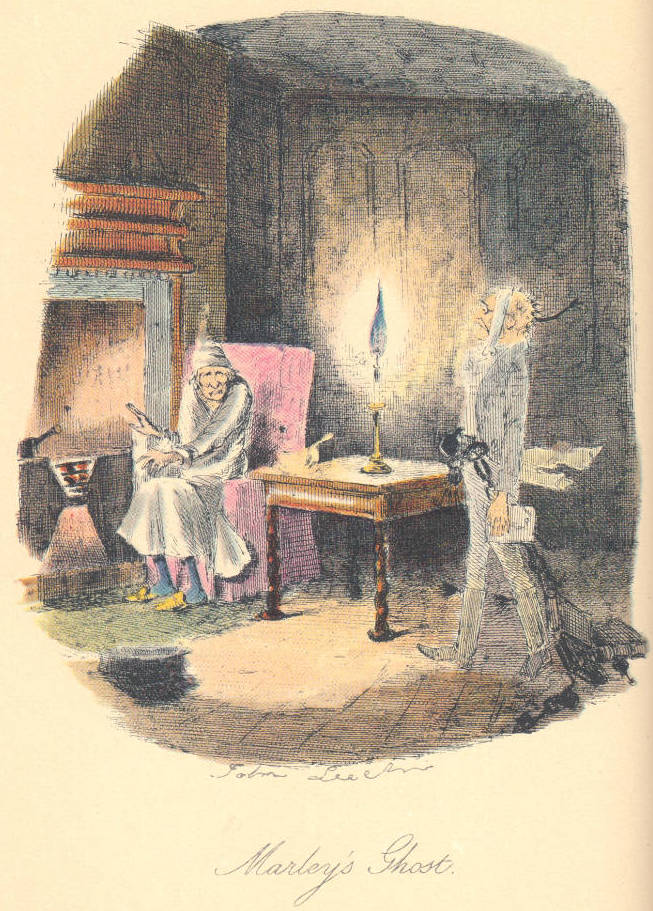
John Leech's original illustration of Ebenezer Scrooge being visited by the ghost of Jacob Marley in A Christmas Carol

Marley was dead to begin with. There can be no doubt whatsoever about that.

And with those immortal words, generations have settled in to embrace the spirit of Christmas — with ghosts. I know very few people1 for whom A Christmas Carol is not an integral part of their idea of the holiday itself. Whether their introduction to it was the text itself, the Muppet version (which actually does include a surprising amount of Dickens’ own words), or any of the myriad other forms and adaptations, its depictions of family and friends getting together in joy, its message of compassion and good will to all mankind, even its nineteenth century trappings of geese and pudding and silly games have all become the markers of the season and the holiday. Yet, for all its good cheer, it is emphatically a ghost story — and a creepy one at that!

Think of the scene when Scrooge, alone in his darkened rooms, hears the sound of Marley’s ghost coming for him:

After several turns, he sat down again. As he threw his head back in the chair, his glance happened to rest upon a bell, a disused bell, that hung in the room, and communicated for some purpose now forgotten with a chamber in the highest story of the building. It was with great astonishment, and with a strange, inexplicable dread, that as he looked, he saw this bell begin to swing. It swung so softly in the outset that it scarcely made a sound; but soon it rang out loudly, and so did every bell in the house.

This might have lasted half a minute, or a minute, but it seemed an hour. The bells ceased as they had begun, together. They were succeeded by a clanking noise, deep down below; as if some person were dragging a heavy chain over the casks in the wine-merchant’s cellar. Scrooge then remembered to have heard that ghosts in haunted houses were described as dragging chains.

The cellar-door flew open with a booming sound, and then he heard the noise much louder, on the floors below; then coming up the stairs; then coming straight towards his door.

Continue reading

Loudly Sing Cuckoo: A Perspective on The Wicker Man (1973)

Dan Mumford’s poster for The Wicker Man

Come. It is time to keep your appointment with the Wicker Man.

Those words, uttered in the stentorian tones of Christopher Lee, echo through the history of horror cinema. And it is, indeed, time that we come to The Wicker Man. It, alongside The Blood on Satan’s Claw and The Witchfinder General, makes up what is often termed “The Unholy Trinity” of folk horror. It is the Ur Text of the genre. The sharp-eyed among you may have noticed that even the name of this website is an homage to the film, and its stunning final scene.

Full disclosure before we begin: I want to like this movie so badly. I can’t say that I actually do. I am, in the truest sense of the word, deeply ambivalent about it. There are moments that I think are perfect. The shape of it appeals to me immensely. The rest of the time it is weirdly groovy, kind of a mess, and feels like it gets in its own way.

None of this has stopped me from watching it multiple times, trying to nail down what about it remains compelling. And, clearly, I am not alone in being intrigued. There is a wealth of writing about The Wicker Man, ranging from densely scholarly essays to enthusiastic rambles to harsh film criticism. But we do all keep coming back to Summerisle.

While the imagery and afterlife of the film are ubiquitous, I’m not sure how many people have actually seen it. So, we are going to take a moment for a brief synopsis.1

Continue reading

“Come Go Along With Me”: Murder Ballads, Fairy Tales, and the Danger of Following Men into the Woods

“Come listen to my story,” the song starts. “I’ll tell you no lies.”

The scene unfolds: a beautiful young woman steals away into the woods at night. The branches creak overhead, the river rushes somewhere through the trees, and the figure of a man beckons her to an open grave or a watery death. In the dark, the wild birds sing.

It is, as they say, a tale as old as time; one that we have seen play itself out in countless fairy tales, ghost stories, plays, true crime podcast, and — yes — ballads. You may have heard the term “murder ballad” before. But what does it mean? As Madison Ava Helm wrote in the introduction to her thesis on the subject: “The ballad is a tricky minx to categorize.”1 Bear with me, and we’ll do our best.

Continue reading

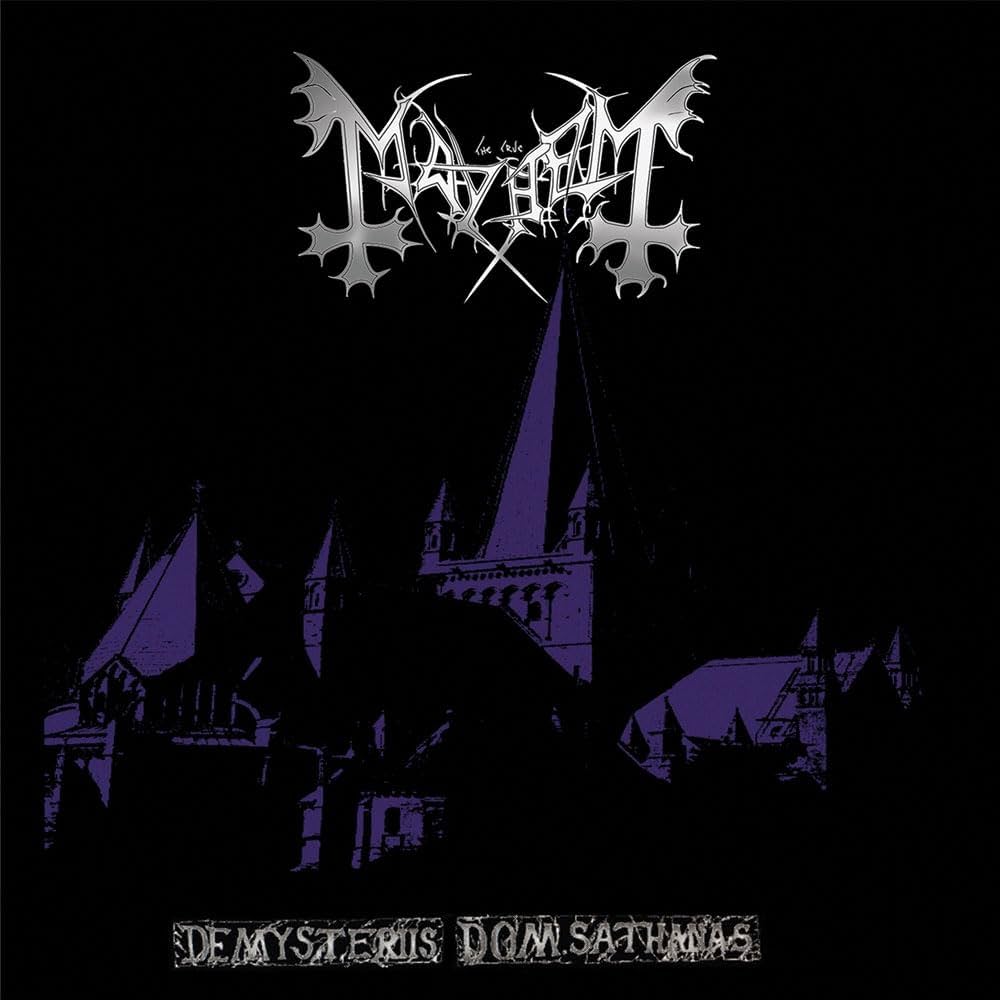
“The Past Is Alive”: Mayhem’s De Mysteriis Dom. Sathanas as Recurring Horror


Horror is an ouroboros. It remains an unresolved and unresolvable aspect of the form, whether horror in media becomes the originator of what frightens us, or if we are already frightened of something to which horror gives a name, a locus. Like science fiction, the best horror is both rooted in timeliness, responding to the specific cultural milieu in which it arises, and unbound by temporal limitations. Perhaps that’s part of what compels some of us about horror, its protean, slippery tendency to elude our ability to control it; perhaps that resistance to control is exactly what repels others.

Thirty years ago, Norwegian black metal band Mayhem released, finally and half-posthumously, De Mysteriis Dom. Sathanas (DMDS, as it’s widely and mercifully abbreviated), and the album sits in that ambiguous territory so much great horror does, swallowing its own tail, the originating site of unease and a consequence of it. And, like many other great works of horror, its behind-the-scenes notoriety has further muddied the source of its impact. Would we find Poltergeist as spooky as we do if we didn’t know how much untimely death followed those involved in making it, if we didn’t know those bodies in the pool were real1? Similarly, would DMDS feel as unnerving if we didn’t know how much death preceded its release? The legendary, ugly shadow of violence can obscure the sheer unholy excellence of this album, its continued power to unsettle, and its complexity; the tabloid-frenzy luridness of the black metal scene in Scandinavia in the early 1990s can too easily become caricature, rendering DMDS a historical curiosity rather than an ongoing source of inspiration, relevance, and real horror.

Continue reading

A Grain of Salt and a Shovelful of Earth: On The “Twilight Zone,” “The Grave,” and a Lack of Western Ghosts

My favorite episode of The Twilight Zone opens with a scene that even the narration admits ought to be the end. The audience sees a desolate, windswept village, one that the imagery of westerns has trained us to understand is somewhere in the Southwest, likely New Mexico. A man is gunned down in the middle of the dusty street, the shots fired by several of the village men hiding in doorways. After he falls, his body is carried into the jail, and a witness is sent to fetch the wounded man’s father and sister to be with him before he dies.

All of this happens in just a few moments, and is merely the prologue. As Rod Serling says in introduction:

Normally … this would be the end of the story. We’ve had the traditional shoot-out on the street and the Bad Man will soon be dead. But some men of legend and folk tale have been known to continue having their way even after death. The outlaw and killer Pinto Sykes was such a person, and shortly we’ll see how he introduces the town, and a man named Conny Miller in particular, to the Twilight Zone.

Continue reading

But What Lurks Without? M. R. James vs. H. P. Lovecraft

It’s sort of strange how omnipresent H. P. Lovecraft is in horror conversations, even now. The legacy of his particular branch of weird is substantial — and, largely, a conversation we are saving for later on. Don’t worry, there is still a lot to say.

A less well-known figure holds a much closer place in my heart: M. R. James.

On the surface, it is strange to compare these two men. James was the father of the antiquarian ghost story. Lovecraft basically created the genre of cosmic horror. And yet, there really is a great deal of common ground. They were, in fact, contemporaries, and died within a year of one another (James in 1936, Lovecraft in 1937). Both wrote stories that took their sensibilities from earlier time periods. Both have had impacts on the horror genre that they never would have foreseen. Both were solitary men whose sexuality is a preoccupation of modern scholars. And, most importantly, both based their horror in a fear of the Outside, of the arcane, and of the forbidden.

Perhaps it’s best to start with some brief biographical notes.

Continue reading